
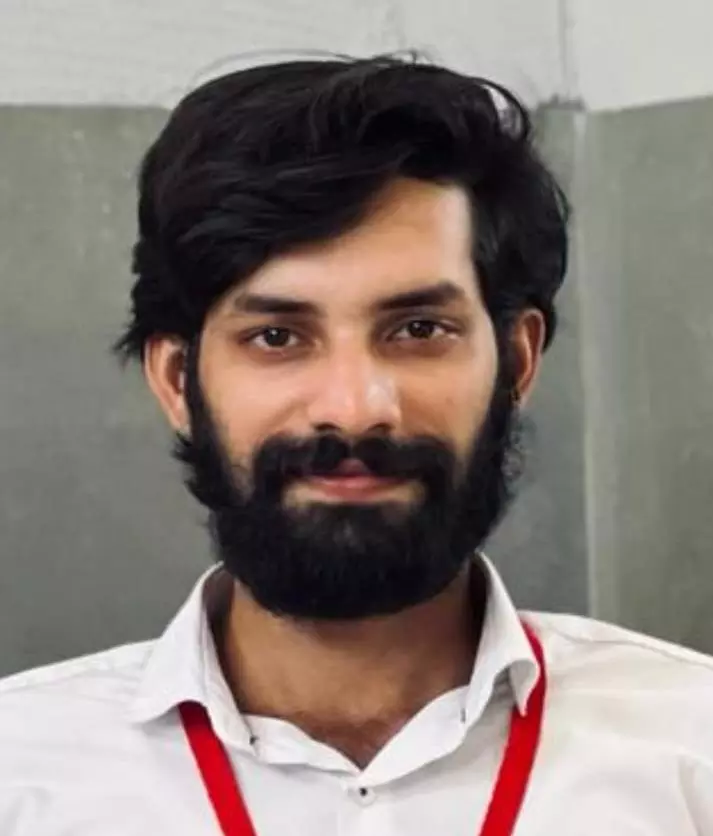
'When the process becomes the Punishment'; Muzzammil Imam Speaks on brother Sharjeel Imam
Muzzammil Imam opens up about the Struggle and complex legal battles of his brother, Sharjeel Imam, who has been incarcerated for over six years under draconian laws like uapa in connection with the alleged 2020 Delhi violence conspiracy case. The ongoing struggle of student activists like Sharjeel Imam who spent years in jail without a trial exposes the harsh reality of a system where 'The legal process itself becomes the punishment' through years of imprisonment without trial, this conversation sheds light on the true political vision of Sharjeel Imam. The conversation with Imam's brother reveals the impact that this process has had on Sharjeel Imam, a scholar with a remarkable political vision.
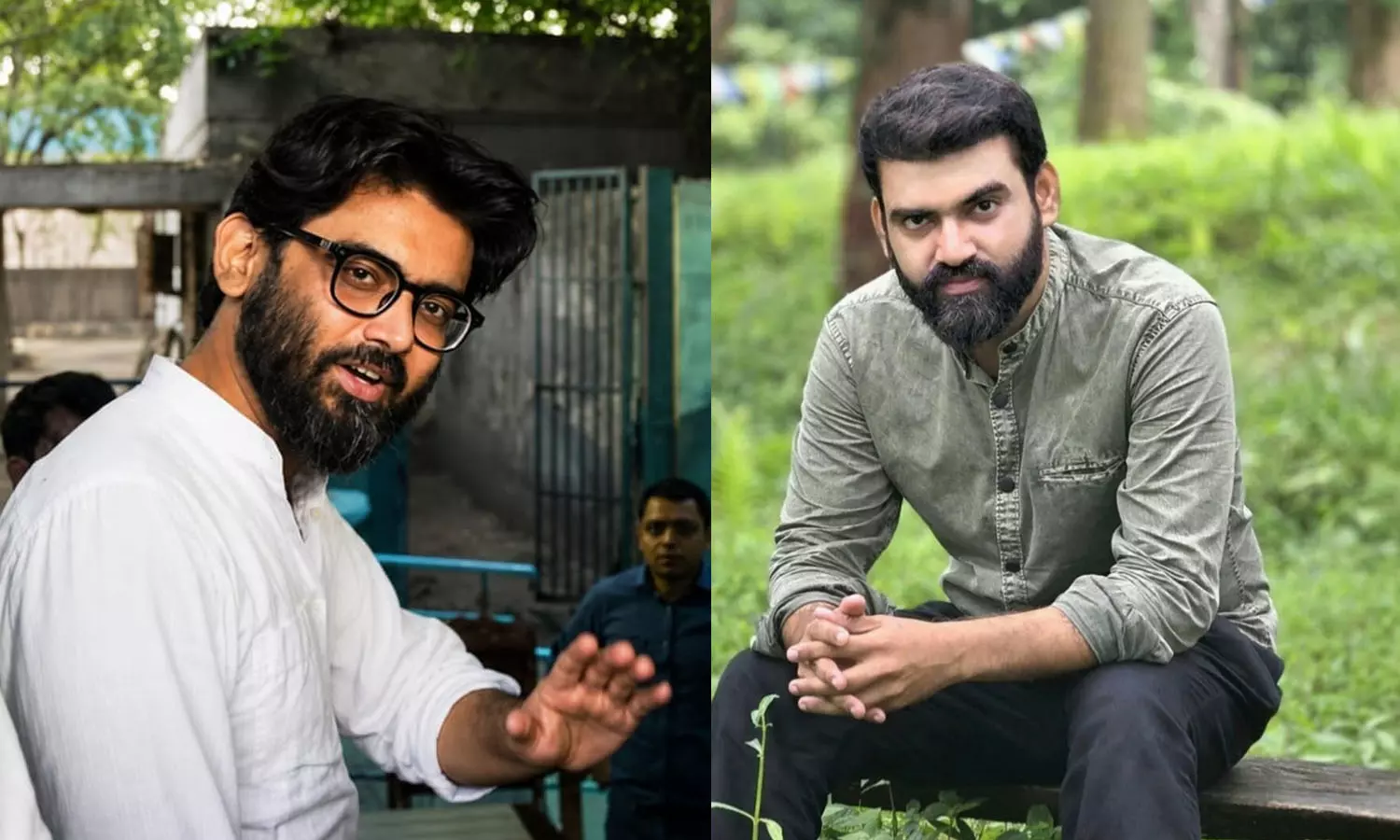
Muzzammil Imam opens up about the Struggle and complex legal battles of his brother, Sharjeel Imam, who has been incarcerated for over six years under draconian laws like uapa in connection with the alleged 2020 Delhi violence conspiracy case.
The ongoing struggle of student activists like Sharjeel Imam who spent years in jail without a trial exposes the harsh reality of a system where 'The legal process itself becomes the punishment' through years of imprisonment without trial, this conversation sheds light on the true political vision of Sharjeel Imam. The conversation with Imam's brother reveals the impact that this process has had on Sharjeel Imam, a scholar with a remarkable political vision. It also challenges the false narratives regarding Imam which were shared extensively by the mainstream media, which helped in the delegitimisation and criminalisation of his political rhetoric.
The interview navigates through several profound themes. It discusses the historical significance of the Shaheen Bagh protest model against the CAA, perspectives on independent minority political leadership, the political isolation their family faced in Bihar, and Sharjeel’s intellectual survival within the unforgiving prison walls. Ultimately, this conversation serves as a deep and nuanced exploration of the ongoing conflict between political prisoners and the state in contemporary India.
Q. Muzzammil, in January 2026, the Supreme Court denied Sharjeel regular bail in the larger UAPA conspiracy case, though he was granted a 10-day interim parole in March to attend your wedding in Bihar. Having managed his legal defense from the outside for over six years, how do you view the current trajectory of this legal battle? What are the immediate strategies for securing his complete release rather than temporary reprieves?
Muzzammil: When you have been managing a legal battle from the outside for over six years, your perspective shifts out of necessity. You stop looking at the system through the lens of pure legal textbook arguments and start seeing it for what it has become for us: a battle of attrition where process itself has become the punishment.
Seeing Sharjeel bhai come home to Bihar on that 10-day interim bail for my wedding this past March was incredibly bittersweet. It was the first time he had stepped out of prison since his arrest in January 2020. For our family, and especially for our mother whose health has been suffering under the weight of all this, having him home in Kako for those few days was a profound relief. But the ticking clock of his March 30th surrender date hung over every single celebration. A temporary reprieve like that is a reminder of how much of his youth, his academic life, and his mind is being taken away without a trial even properly commencing.
Q. Sharjeel’s incarceration has become one of the most prominent examples of the state's use of UAPA and sedition laws against student activists. Based on your firsthand experience fighting these charges in court, do you believe this legal framework is being deliberately weaponized to exhaust political prisoners and stifle independent Muslim political assertion?
Muzzammil: When you are fighting these charges from inside the courtroom, the lines between legal strategy and political reality blur entirely. As Sharjeel’s brother, seeing how these laws are applied on a daily basis makes it difficult to view the process as anything other than a deliberate mechanism of exhaustion. His Single speech fractured into multiple FIRs across different states. Whenever our defense team manages to secure a bail in one case, a new indictment keeps him confined.
As we all know (UAPA) has a very stringent bail provision—specifically Section 43D(5). Under this clause, a court cannot grant bail if it finds, prima facie, that the accusations are true based entirely on the police case diary and charge sheet, this creates a legal architecture where detention becomes the rule and bail becomes a rare exception. So suppressing dissent becomes easiest through this method, as they can keep them incarcerated for years without ever being convicted of a crime.
Q. During the anti-CAA protests, the mainstream media heavily scrutinized Sharjeel, zeroing in on his 'cut off Assam' remark to label him 'anti-national.' As his brother and a journalist who understands his academic background, how would you define Sharjeel’s actual political vision for the marginalized in India, contrary to the narrative built against him?
Muzzammil: To understand Sharjeel, you have to look past the sensationalized television prime-times that intentionally reduced a complex, multi-layered one hour speech down to an isolated, weaponized one minute soundbite. As his younger brother, I have watched him up close long before he became the focal point of national media trials. Mainstream media tried painting him as a radical deluded person but in reality he is an academic, a researcher, computer geek and a deeply passionate historian.
If you look closely at his intellectual trajectory—from studying computer engineering at IIT Bombay to moving into Modern History at JNU—his transition was driven entirely by a desire to fundamentally understand the grassroots structural realities of Indian society.
Contrary to the "anti-national" labels designed to criminalize his dissent, Sharjeel’s actual political vision for the marginalized and minorities in India is built upon distinct academic, historical, and structural pillars.
The media deliberately twisted his phrase "cut off Assam" to imply territorial secession. In reality Sharjeel was invoking the concept of a Chakka Jam (a disruptive democratic sit-in) to compel the state to listen to its citizens. Ironically, almost everyone among the civil rights groups and across the political spectrum distanced themselves from Sharjeel and his statement regarding Chakka Jam but after he was jailed the remaining CAA-NRC activists, later farmers protests etc. employed the same tactics of Chakka Jam. So, while on the one hand, they threw him under the bus for asking people to block roads, later all of them followed him.
He argued that if the state intended to use discriminatory citizenship regimes like the CAA-NRC to potentially disenfranchise millions of marginalized people in the Northeast and across India, the public had a democratic right to use blockades to force the government to come to the negotiating table. His vision was not anti-India; it was an unapologetic demand to protect minority rights against the coercive state apparatus.
Q. Sharjeel is widely recognized as a key intellectual architect behind the Shaheen Bagh protest model. Looking back today,especially with the recent official implementation of the CAA rules, how do you evaluate the legacy of that movement and the warnings your brother issued regarding the systemic marginalization of minorities?
Muzzammil: Looking back at Shaheen Bagh from today's perspective, it is impossible to dissociate the movement from what my brother Sharjeel Imam actually advocated. To understand his legacy and his warnings, you have to look past the media trials and the labels. Sharjeel didn’t look at the Citizenship Amendment Act (CAA) in isolation. As a scholar of modern Indian history, he viewed it as a structural progression, that the CAA combined with a potential National Register of Citizens (NRC) was not just a temporary political issue but a constitutional shift.
Long before the rules were formalized, he highlighted how excluding one specific community (Muslims) from an expedited citizenship pathway structurally subverted Article 14 of the Constitution. He was aware that bureaucratic errors or lack of documentation would disproportionately criminalize poor minorities, leaving them vulnerable to statelessness or long-term detention and with the official implementation of the CAA rules, the reality on the ground has aligned closely with what Sharjeel bhai has predicted.
Ultimately, the Shaheen Bagh model showed the world the power of organic, community-led resistance. However, Sharjeel's and other student activists' continued detention shows that his warnings about the system's direction were not exaggerated; they were a careful interpretation of the political landscape. His legacy is that of a thinker who chose to tell uncomfortable truths about institutional marginalization, bearing the full brunt of the state's response for doing so.
Q. Your brother has consistently emphasized the necessity of independent Muslim political leadership and intellectual assertion. As an activist yourself, how do you see this idea resonating with the Muslim youth in India today, particularly in our current political climate?
Muzzammil: The perspective that emphasizes independent political leadership and intellectual assertion is a subject of intense discussion among Muslim youth in India today. From an analytical viewpoint, this idea resonates strongly with a segment of the youth who feel that traditional political parties have often used minority communities as mere voting blocs without providing genuine representation or addressing substantive socio-economic and legal concerns. For this group, the call for intellectual assertion and independent leadership is seen as a path toward self-reliance, agency, and a more articulate defense of constitutional rights. They view it as a necessary shift from passive participation to active, self-determined engagement in the democratic process.
At the same time, independent, identity-focused political leadership can lead to further political fragmentation and isolation. So the most effective way to safeguard rights and counter majoritarian politics is through building strategic alliances with various marginalized groups and mainstream regional parties
Q. You interact with him during court hearings and prison visits, and he recently spent a few days at home in Kako. How is Sharjeel coping mentally and intellectually after six years inside Tihar Jail? Is he still managing to read, write, and engage with academic thought despite the harsh conditions?
Muzzammil: Six years inside Tihar Jail is a devastatingly long time, and honestly, seeing Bhai come home to Kako for those 10 brief days for my wedding was both deeply emotional and reassuring. If you know Sharjeel, you know he has always been someone who lives in the world of books and ideas. Despite the harsh, isolating conditions of incarceration, his mind remains unbroken. He hasn't stopped reading or writing. For him, academic thought isn't just a pursuit—it is his coping mechanism. Imprisonment has restricted his physical freedom, but it hasn't diminished his intellectual stamina. During his time inside, he has consistently spent hours analyzing historical texts, engaging with legal documents, and teaching his co- prisoners.
Q. Your family has deep political roots in Bihar, with your late father, Akbar Imam, being a prominent figure. How has this political background shaped both Sharjeel’s and your own worldview? Furthermore, has the traditional political establishment in Bihar supported your family during this crisis, or do you feel isolated?
Muzzammil: Our late father, Akbar Imam, was deeply embedded in the politics of Bihar at a time when the state was marred by the caste and class violence of MCC and Ranveer Sena, especially the region he lived in. He contested the assembly elections from Jehanabad on a Janata Dal (United) ticket in 2005, with a focus on grassroot development & community empowerment. He believed in negotiating with existing regional structures to bring about tangible change for the community.
This environment, while growing up, shaped Sharjeel’s and my understanding of political power, governance, and community identity. However, our paths diverged into different spheres. Sharjeel transitioned from his technical background at IIT Bombay into deep academic and historical research at JNU, where his perspective expanded from localized constituency politics to the systemic, structural vulnerabilities facing minorities and marginalized groups across the entire country.
Where my father sought to work within the system to build consensus, Sharjeel’s worldview became focused on intellectually challenging what he saw as systemic apathy, bringing historical critique directly to modern civil rights activism. My own path as a political activist bridges these two influences — valuing the need for structural critique while understanding the immediate, real-world struggles of people on the ground.
When Sharjeel bhai was arrested in 2020, the traditional political establishment in Bihar, including parties that our father was associated with or those that claim to champion secular and minority interests largely turned its back on us. Instead of finding an active safety net in Bihar's political establishment, we experienced deep political isolation. Except for one of his friends who was a former Member of Parliament from Jehanabad Loksabha Constituency. Who openly supported him and raised his voice against Sharjeel bhai's unjust arrest.
Q. In your January 2026 address at the Press Club of India, you spoke passionately about the unjust incarceration of your brother. Over the years, have you felt an unwavering sense of solidarity from civil society, student organizations, and mainstream progressive circles, or do you feel Sharjeel has been selectively abandoned by certain political factions?
Muzzammil: Since you have talked about my January 2026 address, I must reiterate that I have said, “we are not victims. The reality is, let me tell you, I am not a victim. The victim here is Najeeb, against whom injustice was committed. A victim is someone with whom an incident happens unexpectedly, someone who wasn't prepared for it. We have been prepared since day one. The day we stepped out onto the streets — whether it is our brother Sharjeel, me, or thousands of students like us, some of whom lost their eyes, some got their hands broken, some had their legs injured, or their heads fractured. So many lost their children. They have been prepared since the very first day. The day they stepped onto the streets to fight against this tyrannical government for their rights, they were prepared from day one. And when you step out to fight for your rights, you are not a victim; you are going to fight for your rights.
So, when one fights, fights against an unjust system, they don’t complain about being abandoned. It doesn’t make Sharjeel more correct if more people from political parties support him. We have seen that initially, almost nobody wanted to talk about him and created an untouchable out of him. In the last 6 years, things have changed. A lot more people from different political factions have at least started talking about him. We know, people are still afraid to support him publicly but this is how every big movement starts. As the saying goes, “First, they will ignore you, then they will laugh at you, then they will fight you, then you will win.” Of course, there is no denying the fact that different political groups have thrown Sharjeel under the bus to save their skins, which in the long run they couldn’t but we don’t feel sad. This is what happens when you raise your voice against a tyrant. History will do the justice.