
GLMC 2026: Panel Discusses How Global Trade Changes Are Transforming Jobs
The discussion explored how reshoring, nearshoring, and increasingly fragmented value chains are changing how work is organized

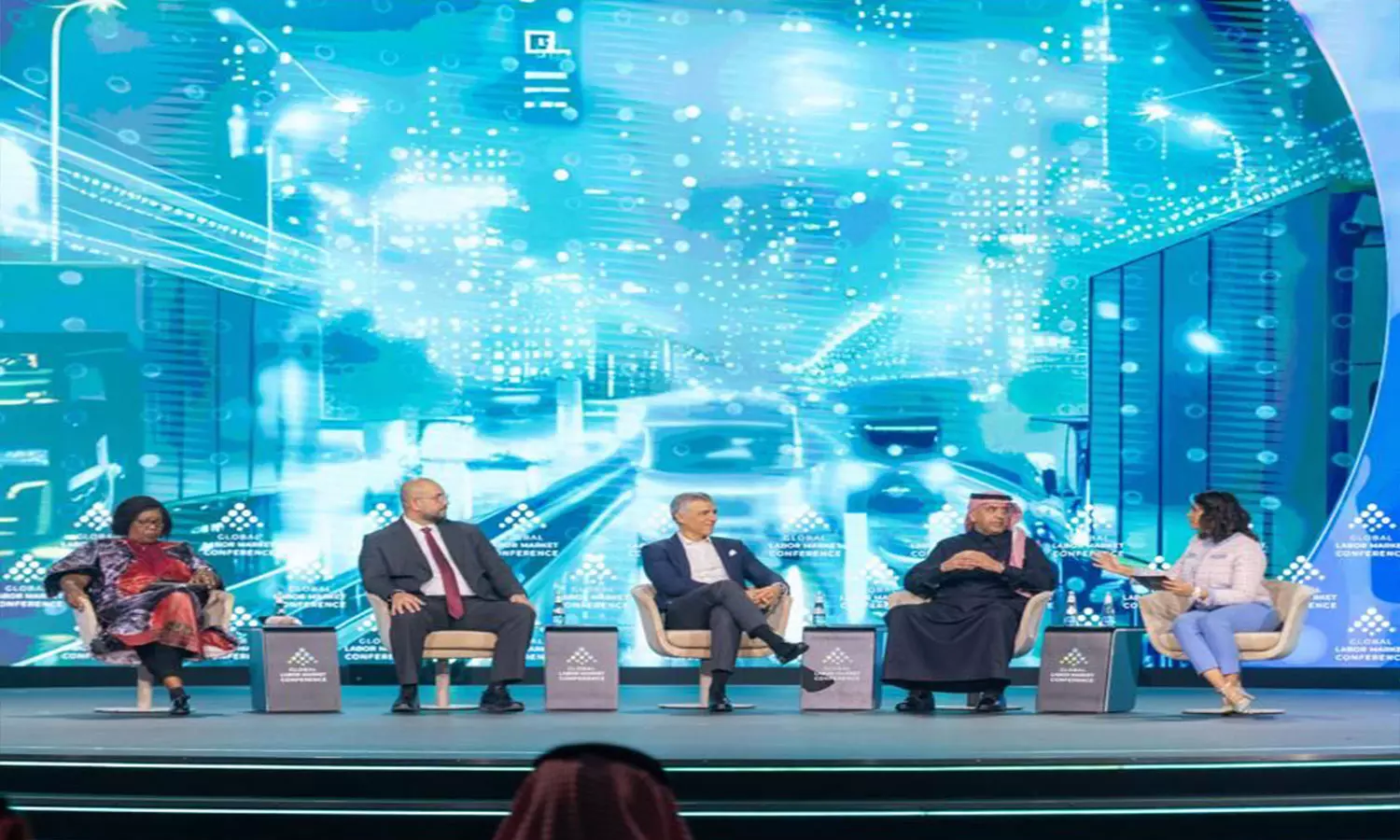
Shifting global trade policies are reshaping labor markets in ways that go far beyond traditional debates around protectionism and liberalisation, speakers said during a main-stage panel at the Global Labor Market Conference 2026. Moderated by Resham Kotecha, Global Head of Policy at the Open Data Institute, the discussion explored how reshoring, nearshoring, and increasingly fragmented value chains are changing how work is organized, skills are deployed, and workers transition between roles.
Panellists highlighted that enterprises are navigating constant operational change, shorter production cycles, and rising compliance demands, often while simultaneously shedding some roles and struggling to fill others requiring new skills. The discussion emphasised the growing importance of workforce resilience, skills portability, and labor mobility, particularly in regions experiencing strong migration flows and rapid technological adoption. Speakers agreed that managing these transitions requires closer coordination between trade, labor, and skills policies, as well as stronger collaboration between governments, employers, and education systems.
Jacqueline Mugo, Executive Director and CEO of the Federation of Kenya Employers and President of the IOE, said, “The impact of trade on labor today is not just about where production moves, but about how effectively enterprises can reorganize work, redesign roles, and manage continuous transition.” Fahad Al Shebel, CEO of the National Unified Procurement Company (NUPCO), noted, “Resilience is not about choosing between protection or openness, particularly in critical sectors like healthcare, it’s about ensuring continuity while continuing to innovate.” Rabea Ataya, Founder and CEO of Bayt.com, observed, “We are seeing unprecedented competition for jobs in the region, driven by localization, migration, and accelerating technological change.” Othman Belbeisi, Regional Director for the Middle East and North Africa at the International Organization for Migration, added, “Transition is inevitable, but it can be managed if training systems respond to real labor demand and skills are recognized across borders.”
Adjust Story Font
16