
GLMC 2026: World Bank’s Mamta Murthi Highlights Industry-Led Workforce Transformation
She emphasised that sustained investment in people is central to unlocking human capital

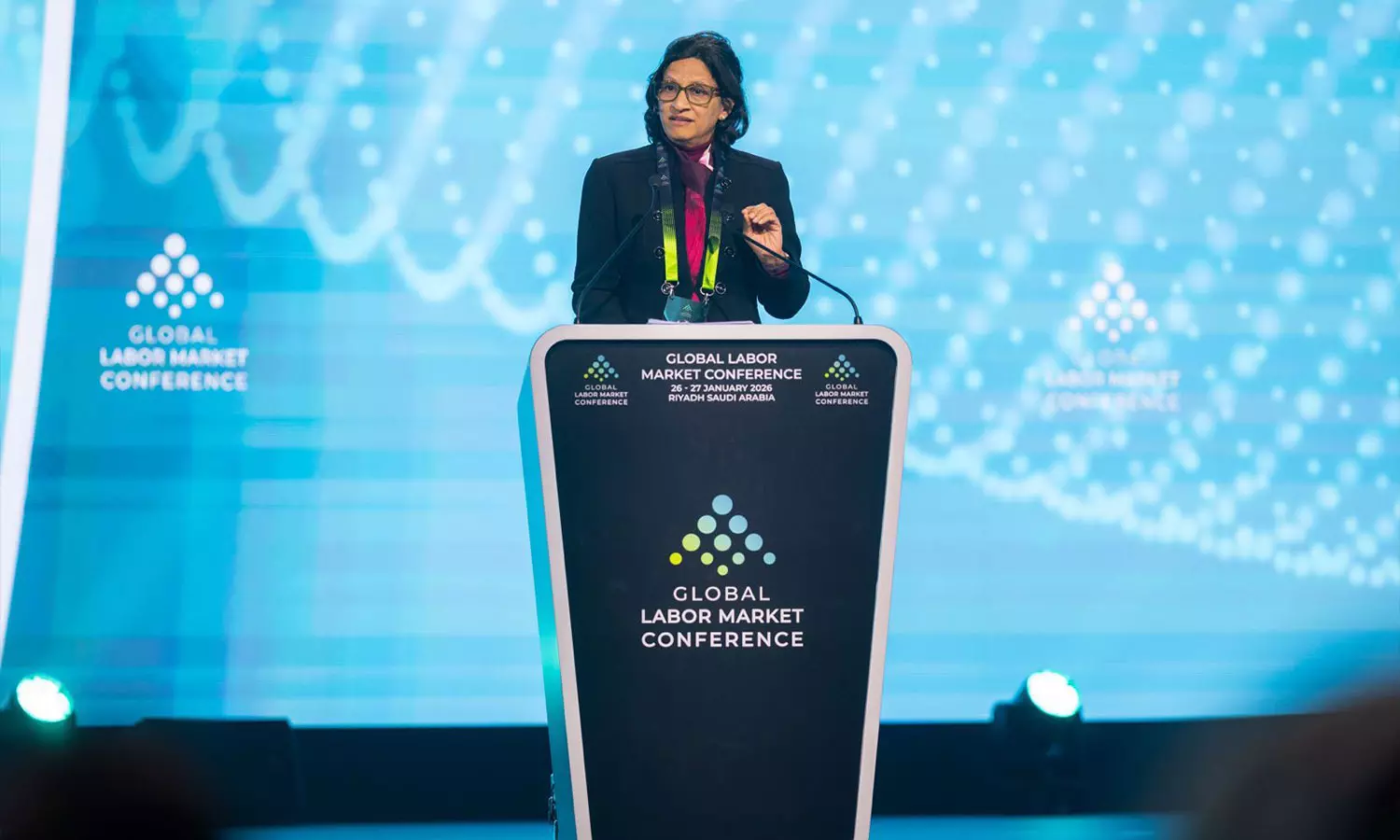
Riyadh: On the first day of the Third Edition of the Global Labor Market Conference (GLMC), Dr. Mamta Murthi, Vice President for the People at the World Bank, delivered a keynote address focused on the need for workforce systems to evolve in line with rapid changes in the global economy.
Dr Murthi highlighted the collaboration between the Kingdom of Saudi Arabia and the World Bank as a model for translating evidence-based policy into tangible economic opportunities for firms of all sizes, while advancing inclusive job growth. She emphasised that sustained investment in people is central to unlocking human capital and requires a fundamental shift in how finance is structured and how workforce transformation is delivered.
She noted that labor market challenges and opportunities vary significantly across regions. In particular, she highlighted that Sub-Saharan Africa and South Asia have strong potential to drive future growth if their young populations are provided with relevant and market-aligned skills. Dr Murthi drew attention to persistent challenges in skills development, including education systems that prioritise inputs over outcomes, training programs designed for outdated job roles, skill mismatches, and the inability to scale effective solutions. She also highlighted the risks of supply-driven approaches that are insufficiently connected to labor market demand.
To address these challenges, Dr Murthi outlined three major shifts required in workforce development. These include the adoption of industry-led solutions, embedding market-driven approaches to unlock job opportunities across value chains, and prioritising sector-based reforms to enable long-term ecosystem transformation before system-wide change. Central to these shifts is deeper engagement with employers, positioning them as key drivers of skills development and job creation.
Dr. Murthi also detailed the World Bank’s expanding knowledge and learning agenda. This includes the development of a new Human Capital Index that incorporates higher education and on-the-job learning, enabling governments to better identify skills gaps. She emphasised the integration of education, skills, and labor market diagnostics into economic and fiscal policy advice.
She outlined key initiatives under this agenda, including an Annual Labor Market Academy, a Global Expert Advisory Panel, and practical guidebooks to support short-term, targeted workforce interventions. She also noted that the World Bank will publish a report on Saudi Arabia’s progress in labor market and skills reform. Dr. Murthi concluded by underscoring the importance of designing inclusive workforce policies from the outset and integrating them into the global labor economy. She emphasised the need for interdependence and coalition-building across governments, industries, and knowledge institutions to translate evidence into action.
Adjust Story Font
16