
European Space Agency Achieves First Artificial Solar Eclipse
This complex mission demands extraordinary precision, maintaining alignment within millimeters, despite the spacecraft being no larger than 5 feet.

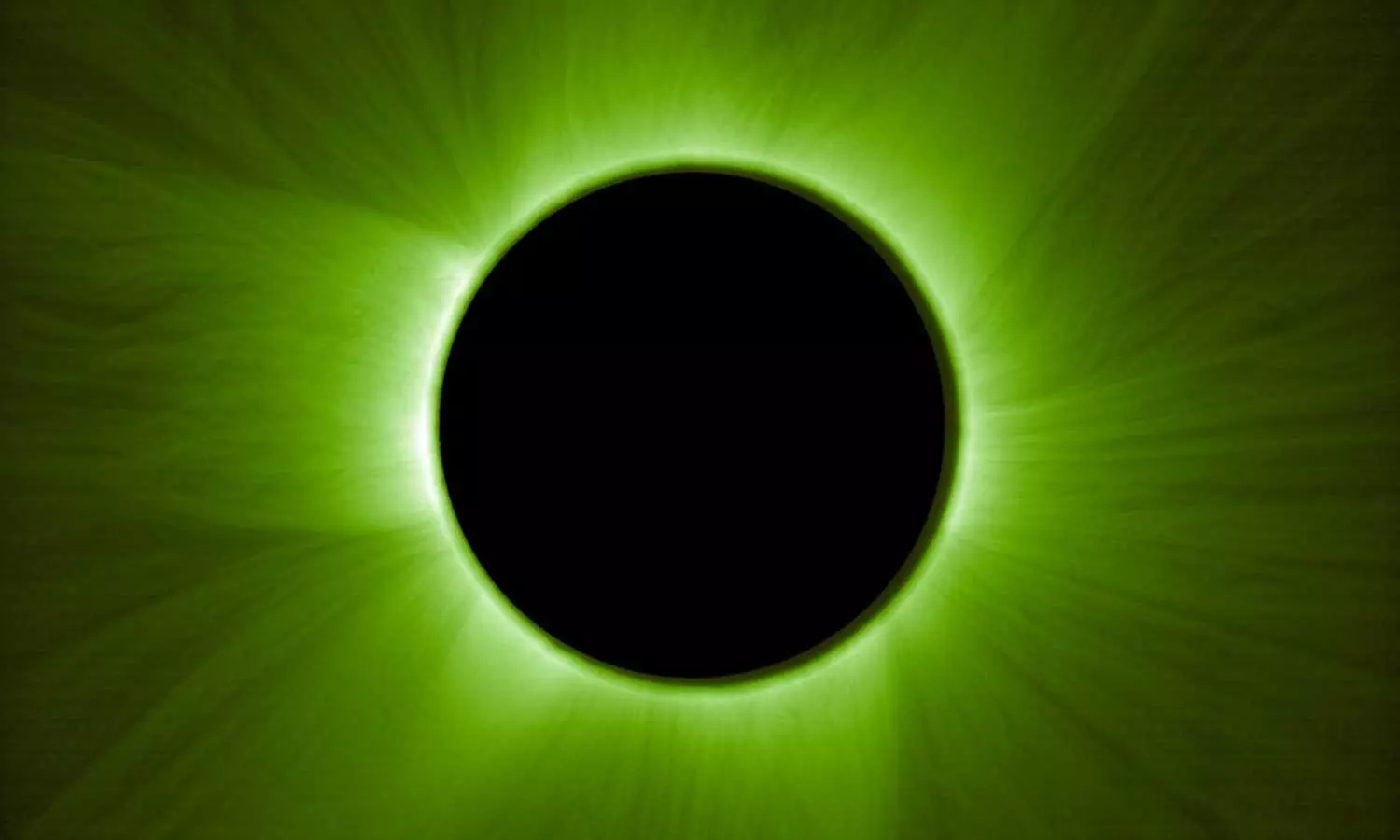
In a groundbreaking advancement for space science, the European Space Agency's (ESA) Proba-3 mission has successfully created the first artificial solar eclipse using autonomous satellite formation flying. Displayed at the Paris Air Show, this milestone allows scientists to capture the images of the Sun's corona.
Launched in December 2024, the mission comprises two satellites – the Coronagraph and the Occulter – operating in synchronized orbits many kilometers above the Earth. Positioned 150 meters (492 feet) apart, the Occulter satellite precisely blocks sunlight, just like the Moon during a natural eclipse, while the Coronagraph observes the Sun's corona using a telescope. This complex mission demands extraordinary precision, maintaining alignment within millimeters, despite the spacecraft being no larger than 5 feet. The system relies on a suite of technologies, including GPS navigation, star trackers, lasers and radio links.
Since March, Proba-3 has simulated ten artificial eclipses, with the longest lasting five hours. The Royal Observatory of Belgium, which leads the scientific aspect of the mission, plans to extend eclipse durations to six hours starting in July. Scientists expect the mission to yield two artificial eclipses per week, generating nearly 200 high-resolution images over its two-year duration, while the natural eclipses occur roughly once every 18 months. Unlike earlier missions, which used single satellites to simulate eclipses internally, Proba-3's dual-satellite design provides a more accurate view of the solar corona.
Adjust Story Font
16