
Narayana Murthy Cites China's 9-9-6 System To Back 72-Hour Work Week Call
The statement triggered a polarised response on social media and in corporate circles.

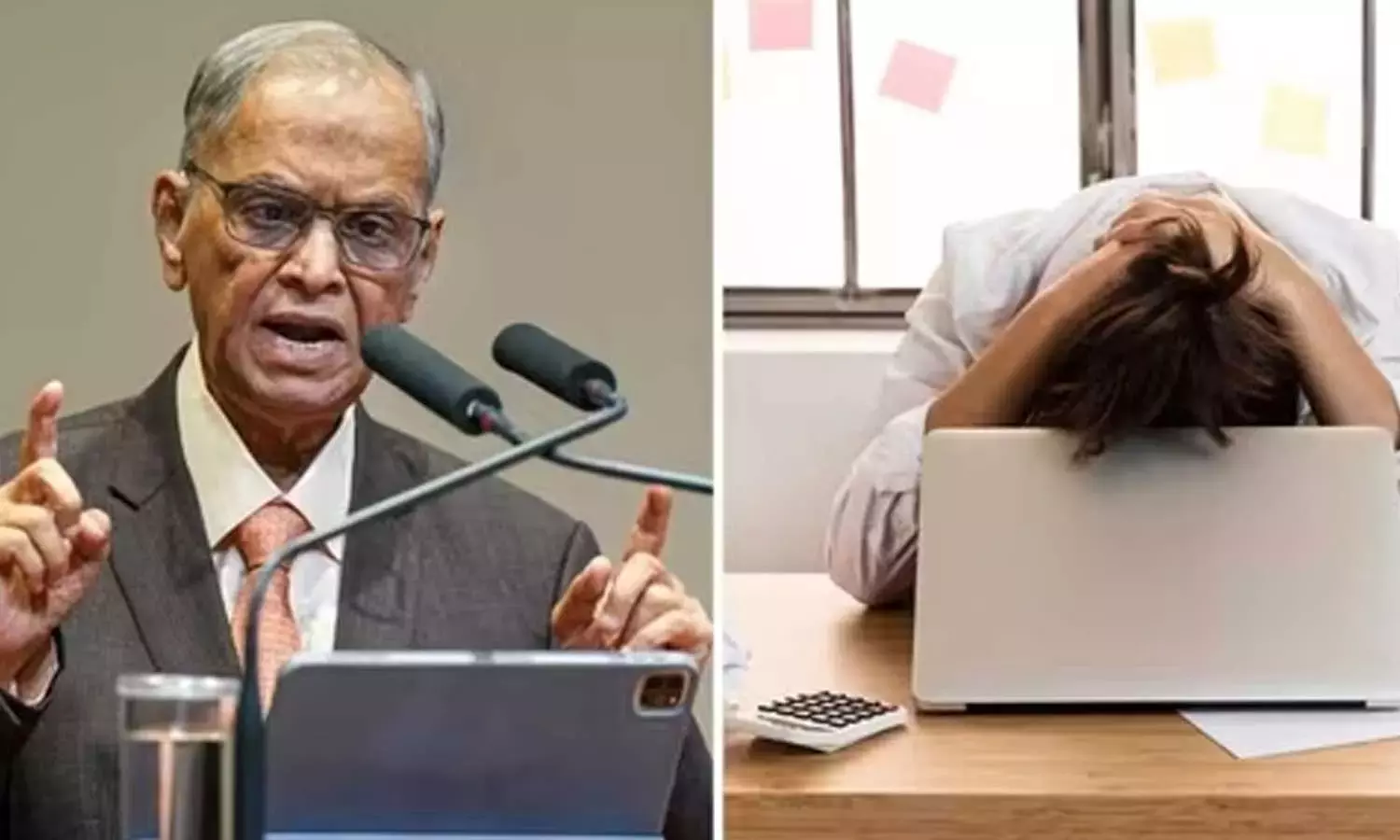
Infosys founder Narayana Murthy has sparked a fresh debate after suggesting a 72-hour workweek for India’s youth. He drew inspiration from China’s “9-9-6” work culture, where employees work from 9 am to 9 pm, six days a week. Murthy argued that India can bridge its economic gap with the world’s top competitors only through extraordinary discipline and hard work.
Citing China’s growth, he highlighted how prolonged working hours, commitment, and productivity contributed to their economic rise. He also noted that senior leaders from his circle had travelled across China to witness the country’s disciplined work culture firsthand. Murthy emphasised that progress comes when intelligent work is paired with consistent effort, and those who have benefited from opportunities have a responsibility to “give back” through stronger commitment.
The statement triggered a polarised response on social media and in corporate circles. Critics pointed out that many professionals already work long hours due to heavy workloads and argued that extending workweeks would not address underlying challenges such as low productivity, infrastructural stress, inadequate pay, and burnout. Analysts focusing on gender issues warned that prolonged work schedules disproportionately affect women, who often bear a larger share of unpaid home responsibilities, potentially reducing workforce participation and deepening gender inequality. Health experts also cautioned that longer working hours increase stress and health risks, undermining creativity, judgement, and long-term workforce sustainability.
Some economists and business leaders agreed that India’s youth need to be disciplined and highly skilled to boost productivity. However, even supporters acknowledged that longer workweeks alone cannot substitute for reforms in efficiency, skills development, digital infrastructure, and workplace design.
Adjust Story Font
16