
'Supreme Court Too Has Role In Pahalgam Attack': RSS Leader J Nandakumar
Nandakumar also mocked the judges of the Supreme Court.

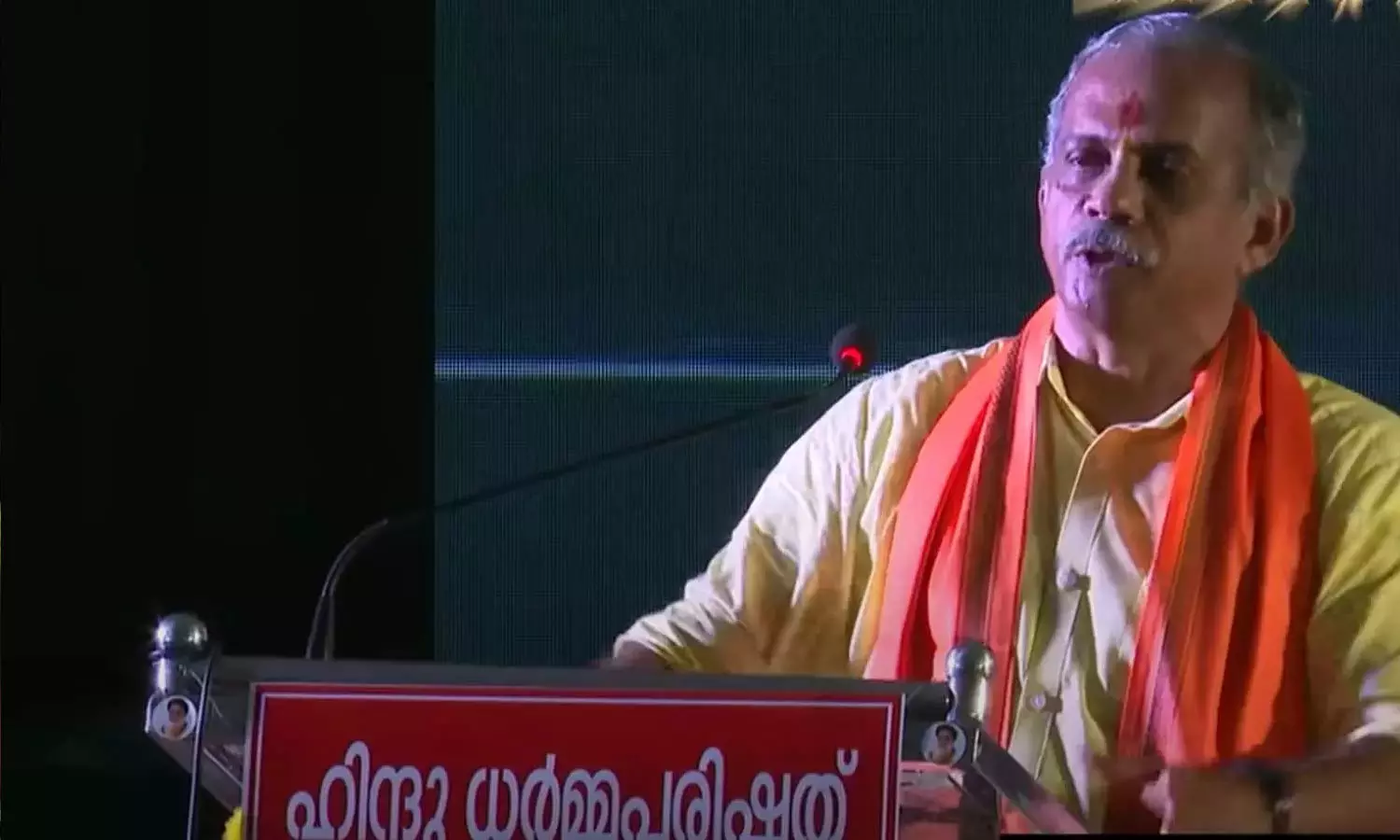
Senior RSS leader J Nandakumar said that India's Supreme Court also holds some responsibility in the worsening situation in Jammu and Kashmir and the Pahalgam attack. The RSS leader made the controversial statement during the Ananthapuri Hindu Maha Sammelan in Kerala's Thiruvananthapuram. J Nandakumar is the National Convenor of Prajna Pravah, the intellectual wing of RSS.
Nandakumar said that the central government was compelled to proceed with the Supreme Court’s directive to conduct elections in Jammu and Kashmir. Consequently, elections were held in Kashmir before normalcy had been restored, said the RSS leader and added that the move led to the rise of a government that supports terrorists and provides them access to power. Meanwhile, Nandakumar also mocked the judges of the Supreme Court. "They continue to remain in such a position. Seated in power, they went so far as to create an entire system solely to appoint their children, sons-in-law, relatives, and even household staff to positions as judges," the RSS leader said.
The Ananthapuri Hindu Maha Sammelan is an annual event held in Thiruvananthapuram under the leadership of the Hindu Dharma Parishad. In 2022, while addressing this event, former legislator and senior BJP leader PC George said restaurants run by Muslims used certain drops that causes impotence amongst non Muslims. The politician had also urged non-Muslims to boycott businesses run by Muslims. PC George was also taken into custody by police on that occasion for his communal and inflammatory remarks against Muslims.
What J Nandakumar said:
"Why do we keep failing? It is because we are not stating things clearly. What danger is there in speaking the truth plainly? In fact, behind this Pahalgam incident, behind this attack, in the worsening of the situation in Jammu and Kashmir—though it may be sub judice, there is nothing wrong in saying it—when I step down from here, even if the Supreme Court punishes me, I have no problem with that. Doesn’t our Supreme Court bear a significant share of responsibility in this? A significant role? After Article 370 was abrogated, the decision to abrogate it was not unconstitutional; it was taken in accordance with the Constitution. It was passed through a vote by elected Members of Parliament. Now issuing a final directive to the very government that made the decision to pass it, saying that elections must be held before this coming September. Wasn’t a final directive already issued to the president? Weren’t final directives issued to the governors as well? They sit like this—as if they are the majesty of the collegium, or rather, the emperors of the collegium. They continue to remain in such a position. Seated in power, they went so far as to create an entire system solely to appoint their children, sons-in-law, relatives, and even household staff to positions as judges. And then, to ensure that the beautiful, palace-like residences in the Lutyens’ don’t go to anyone else, systems have been put in place for their own children to become judges so that judgements can be drafted and written right from there itself. Who truly understands whether the situation in Jammu and Kashmir is peaceful or not? Is it those sitting in the air-conditioned chambers of the Supreme Court in Delhi, or the military personnel on the ground who are working there? Is it the security agencies operating in the region or the administration leading them? It’s a simple question, isn’t it? And yet, orders are being issued without taking that into consideration. The central government has a sense of democratic responsibility—that the executive, judiciary, and legislature, though they may have disagreements and even conflicts, should not conduct themselves as if it were a street fight. It was with that democratic consciousness in mind that the central government tried to express itself that circumstances are not ready yet. They accepted it in order to avoid a confrontation. At a time when Jammu and Kashmir had not yet reached full stability, a government that either supports terrorism, is likely to support it, or allows terrorists access has come to power."
Adjust Story Font
16